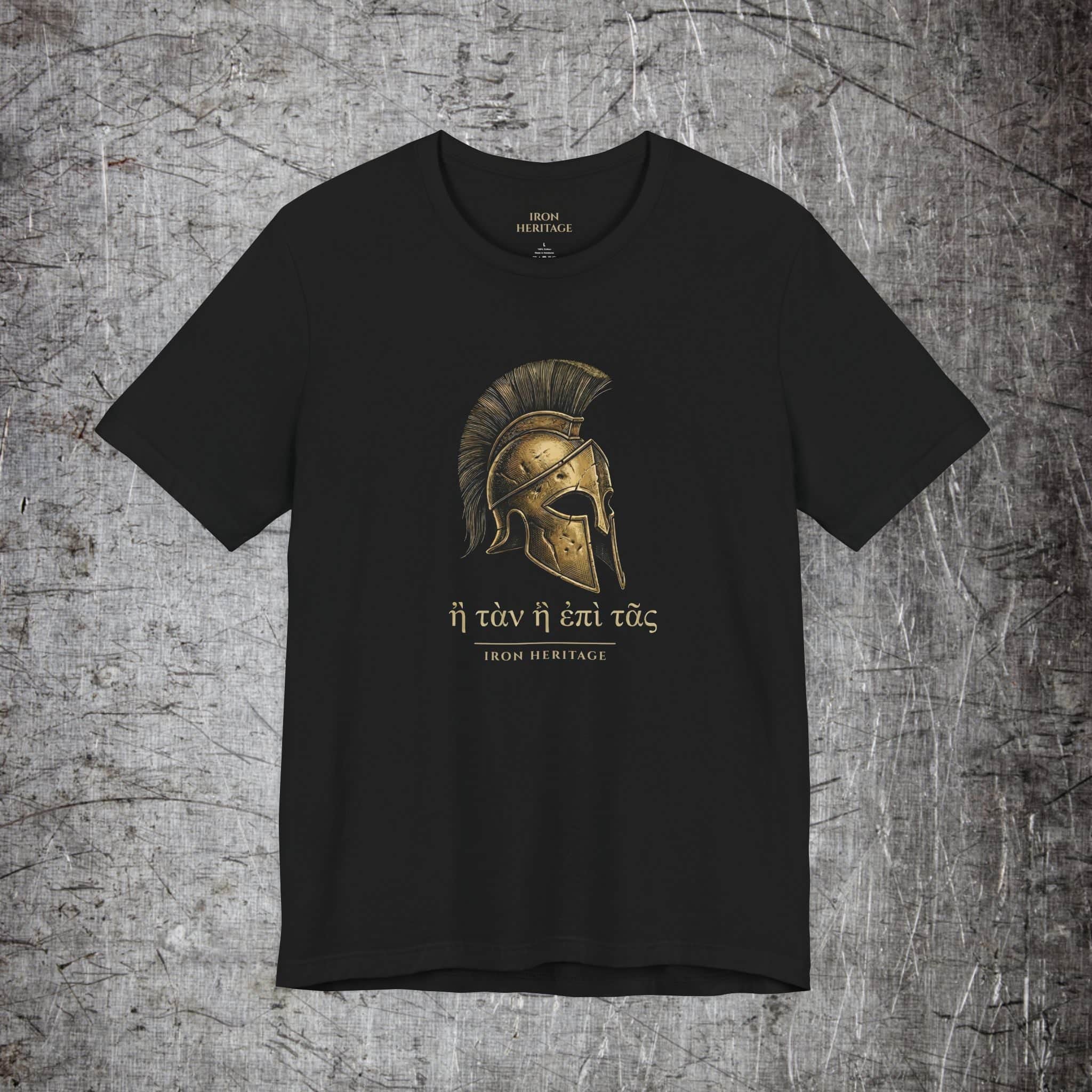
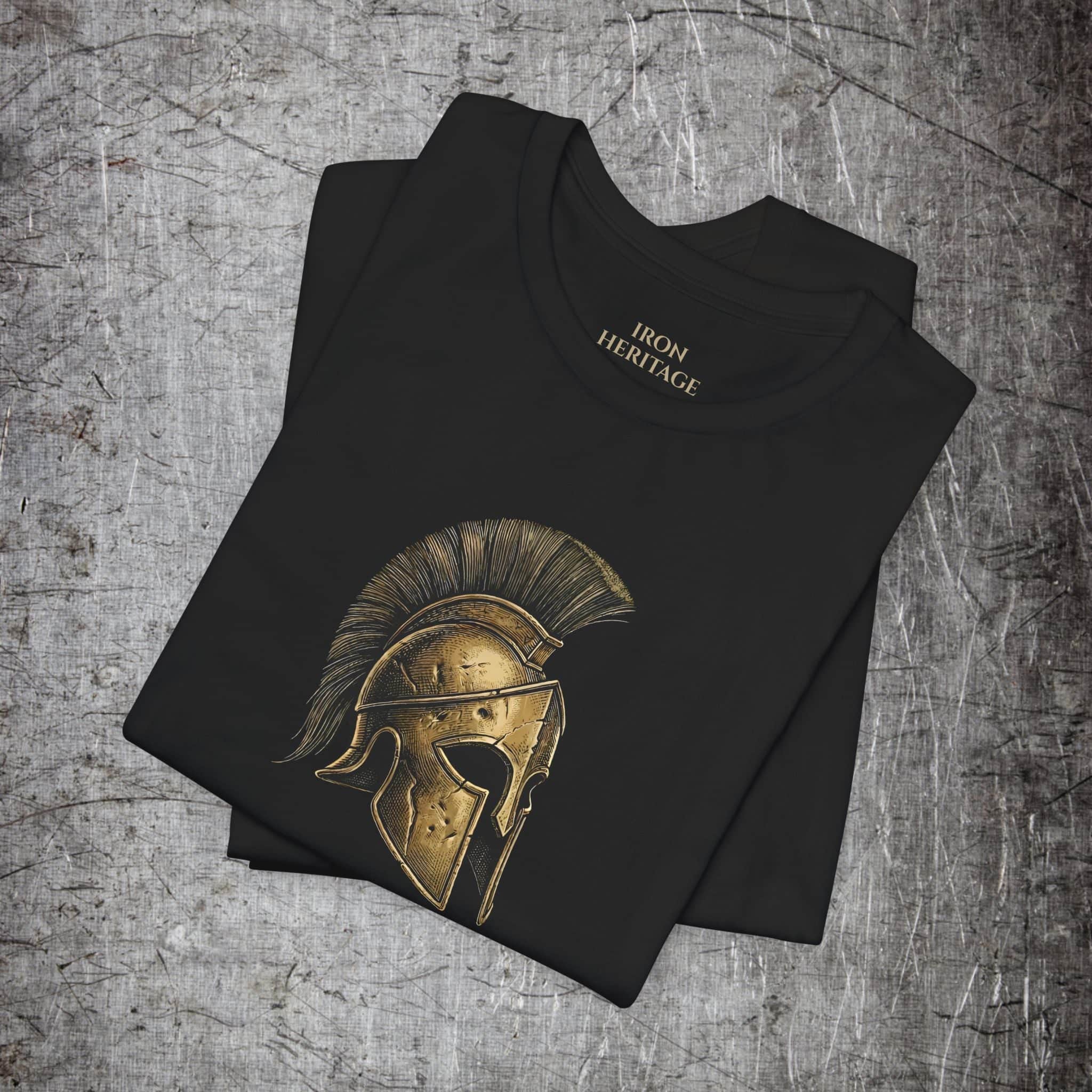
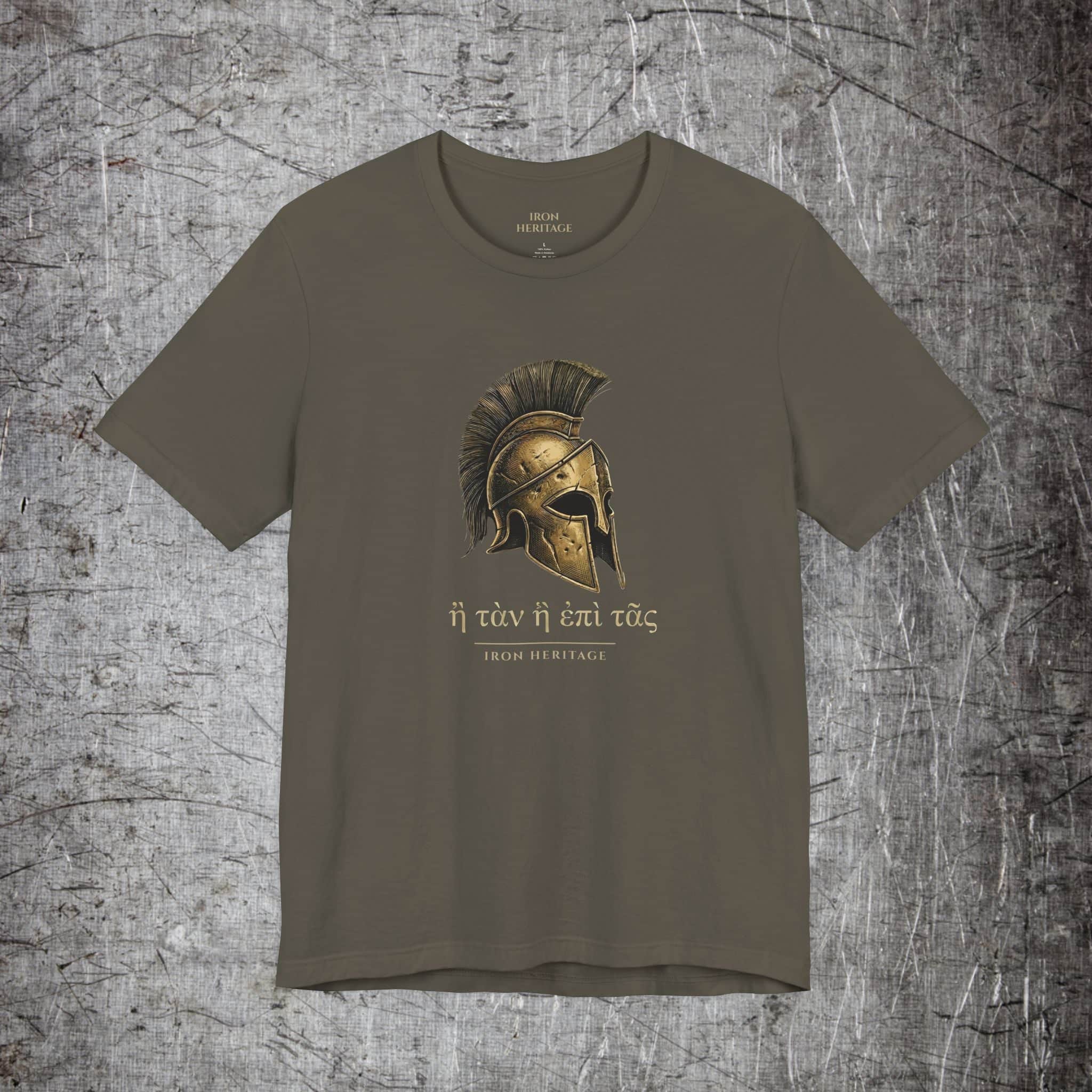
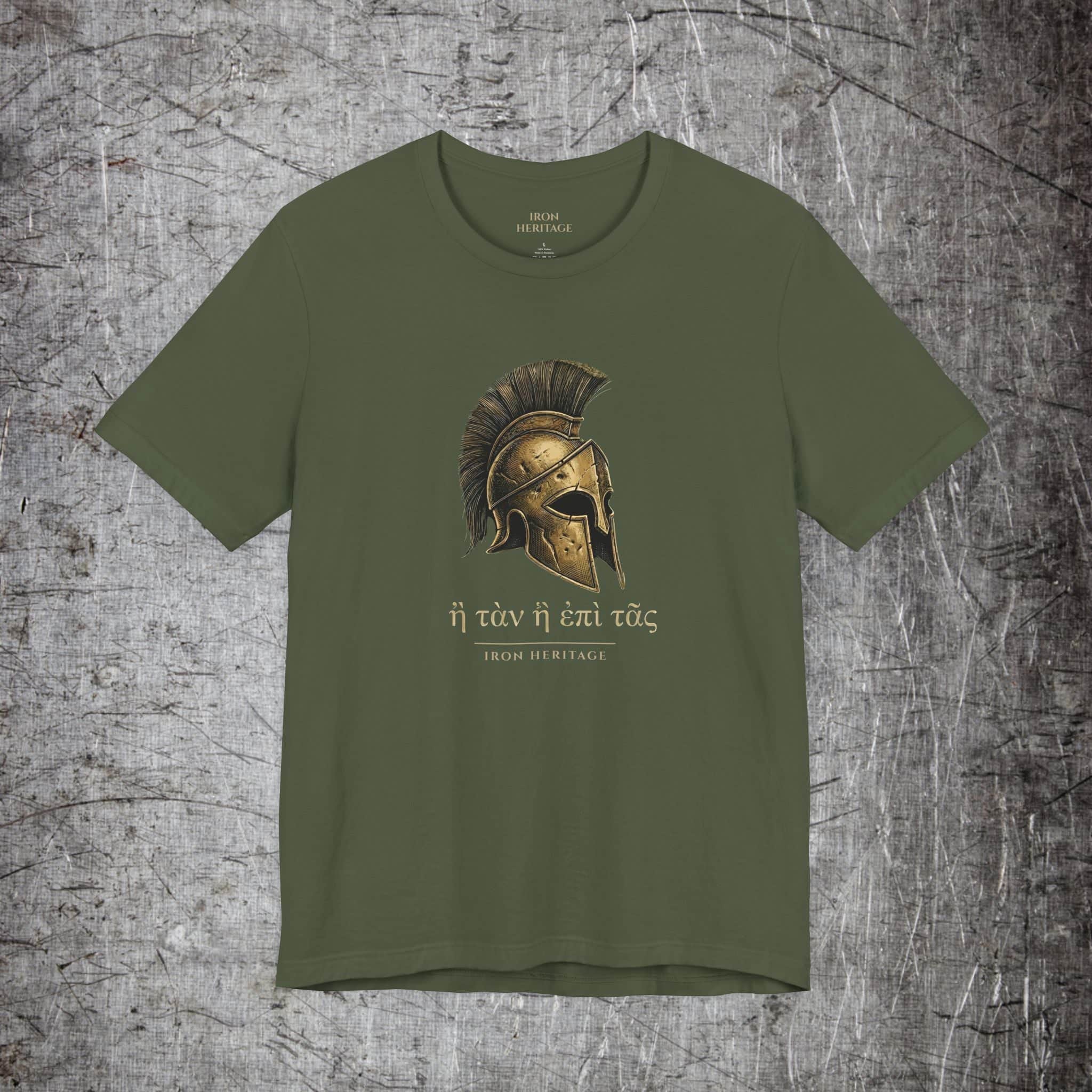
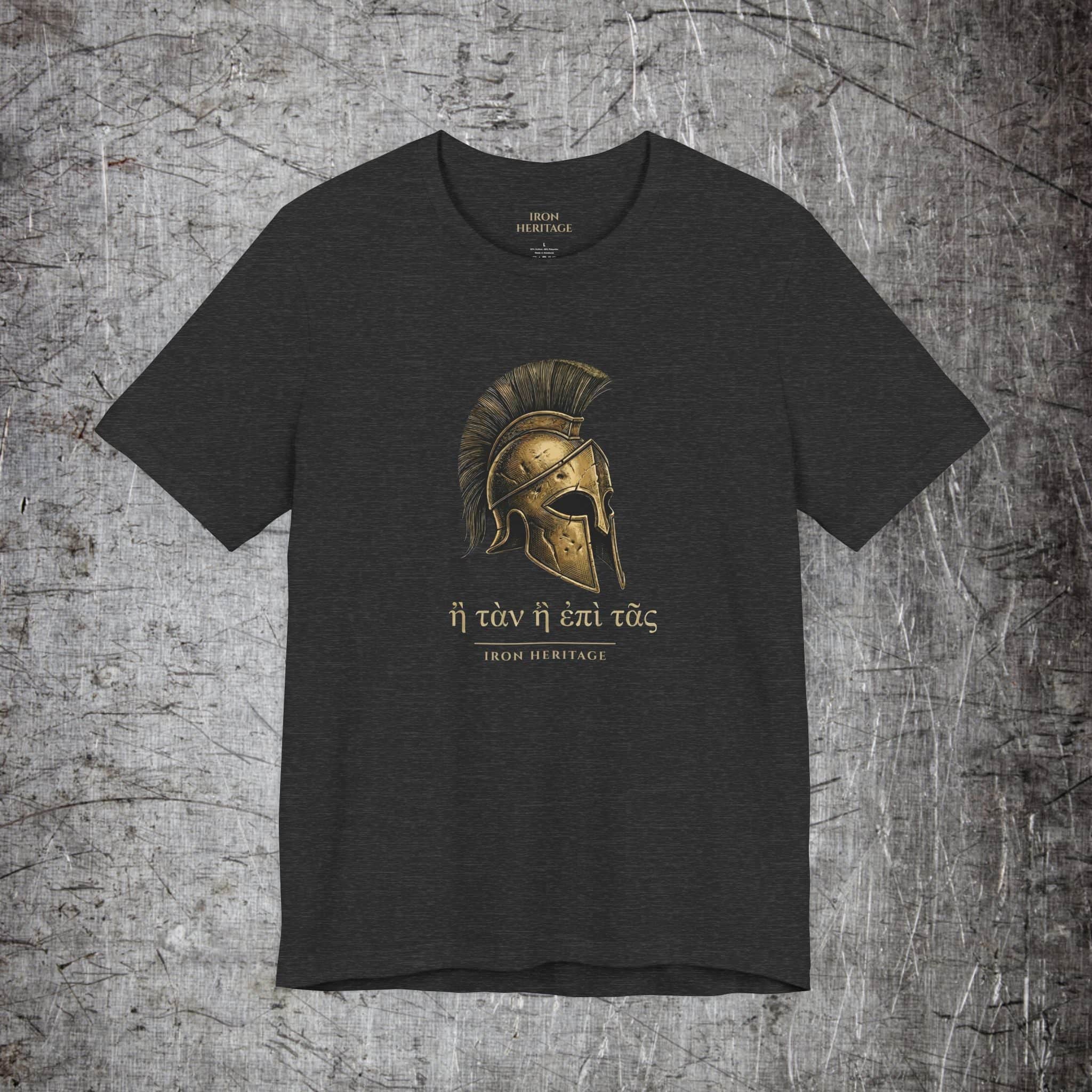
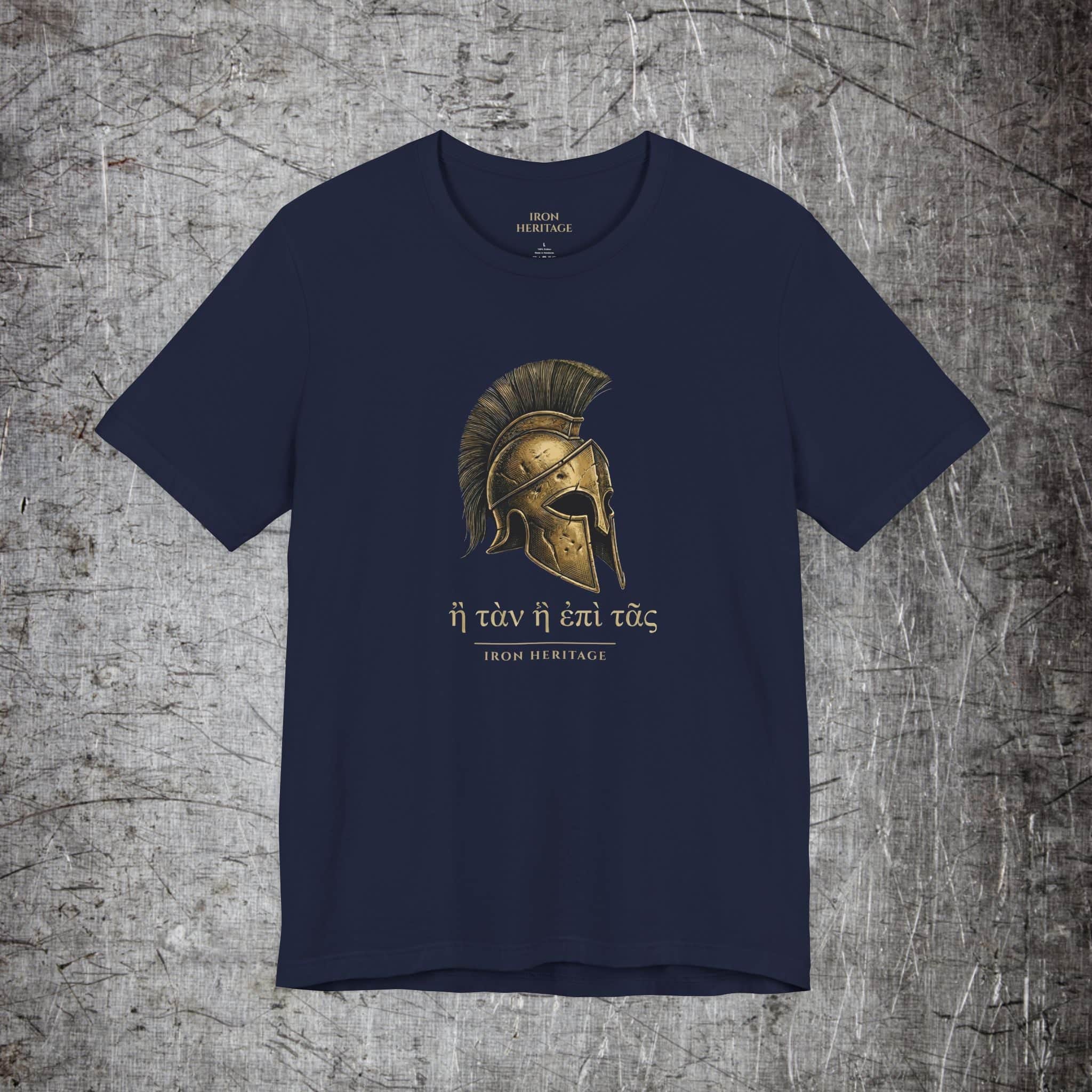
With Your Shield T‑Shirt
Premium heritage apparel rooted in history.
Designed by veterans. Built to last.
BUILT TO LAST
- 100% Airlume combed and ring‑spun cotton (lightweight 4.2 oz) for breathable all‑day comfort
- Ribbed knit collar, shoulder tape, and side seams for shape retention and a clean fit
- Retail crew‑neck fit with tear‑away label, comfortable layering and minimal irritation
- REACH certified; responsibly manufactured (Fair Labor Association, Platinum WRAP) with country of origin Honduras
Ships Fast. Ships Free Over $75
Free shipping on all orders over $75!
Most orders ship within 1–2 business days.
Delivery typically 5–7 business days.
Not right for any reason? Contact us within
30 days. We stand behind everything we make.
Read the full history behind the design below.
Choose options
The History behind the design
The Spartan shield wasn't designed to protect just the man carrying it.
It was designed to protect the man standing to his left.
In the phalanx, every warrior locked his shield into the line, overlapping, interlocked, one wall of bronze moving as a single body. The line held because every man held. The moment one man dropped his shield and ran, the gap opened. The line broke. And everything behind it, the battle, the city, the families, was exposed.
This is why a Spartan mother handed her son his shield before battle with a single command: ἢ τὰν ἢ ἐπὶ τᾶς.
With it or on it.
Come home carrying your shield, or come home carried on it. There was no third option, because the third option was dropping the shield and running. And a man who did that didn't deserve to come home at all.
It wasn't a statement about survival. It was a statement about honor, the family's honor, carried into battle on a piece of bronze and either returned intact or paid for in full.
The men who held the pass at Thermopylae in 480 BC understood this. Leonidas didn't select 300 men who were willing to die. He selected 300 men who had already decided they wouldn't drop the shield. The outcome was never the point. The standard was.
ἢ τὰν ἢ ἐπὶ τᾶς. The words are 2,500 years old. The standard hasn't changed.